

Agriculture Secretary Francisco P. Tiu Laurel Jr. Is urging members of Congress to support the extension of the Rice Competitiveness Enhancement Fund (RCEF).
RCEF, which has provided additional funding for government initiatives to improve the livelihoods of Filipino rice farmers, is a component of the Rice Tariffication Law or Republic Act 11203 that is being studied for possible amendments.
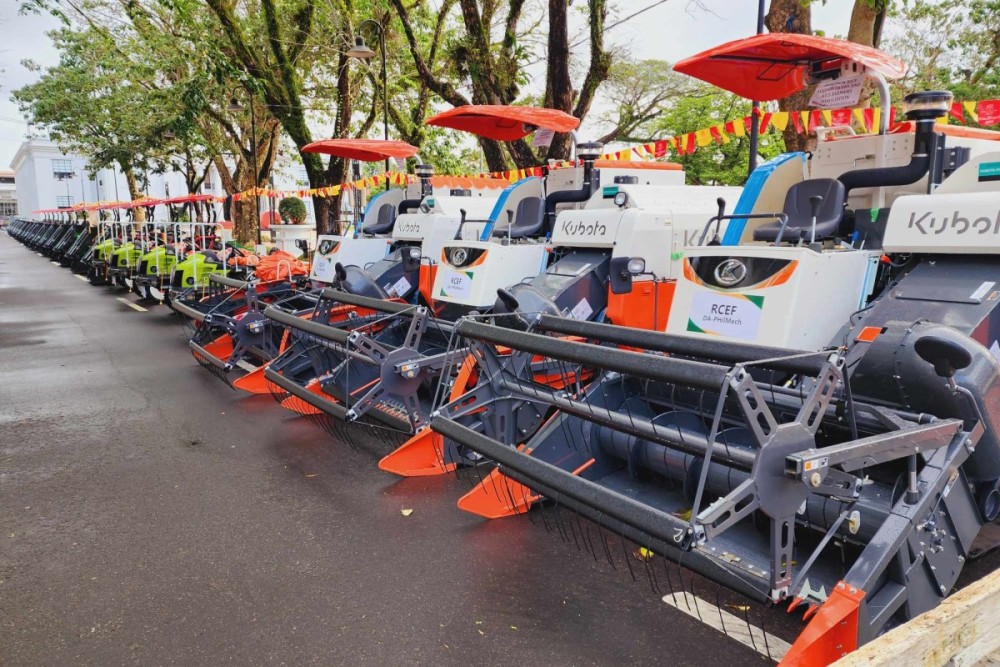
In his report to the Congressional Oversight Committee on Agricultural and Fisheries Modernization led by Senator Cynthia Villar on May 14, Laurel said the RCEF, otherwise known as Rice Fund that would expire next year, is a “dynamic economic strategy” that has allowed the government to utilize tariff collections from imported rice to enhance farmers’ productivity and incomes through three major programs: provision of farm machines; distribution of high-quality rice seeds; and training and capacitating of rice farmers.
The Rice Fund “has provided a substantial revenue stream for the government to finance essential development projects aimed at improving the competitiveness of the rice sector in the Philippines,” said Laurel, who sought the extension of RCEF until 2030 and changes to the fund’s allocation to improve efficiency and optimize its impact on the country’s rice sector.
The Rice Fund gets and allocation of P10 billion a year for the distribution of farm machineries and seeds, among others, with excess tariff collection allocated for other types of programs for rice farmers like cash assistance.
Laurel said over a million Filipino rice farmers have benefited from the Rice Fund since its implementation in 2019.
“The RTL has leveraged tariff revenues to fund critical initiatives that have brought transformative changes to our agricultural landscape. Notably, the provision of high-quality seeds and modern machinery through the RCEF has led to a remarkable increase in rice yields and a reduction in production costs,” he said.
“Specifically, our data shows that from 2019 to 2023, palay production across the 57 RCEF provinces increased by approximately 7 percent,” he added.
Aside from extending the life of the Rice Fund, the Department of Agriculture has also proposed changes to the RTL that would allow the National Food Authority temporary powers to intervene in the rice market as needed to correct significant price disparities and perform price stabilization function in times of food security emergencies and periods of sudden price hikes and sustained high prices of rice, creation of an office that would coordinate various rice programs of the government, and strengthening regulatory functions specifically targetting anti-competitive practices such as rice hoarding and price manipulation to protect consumers and ensure market fairness.
These strategic enhancements aim to bolster the resilience and sustainability of the Philippine rice industry, securing long-term food security and economic stability for the country.
LATEST MOVES IN CONGRESS
As of the latest, the House of Representatives on approved on second reading the measure seeking amendments to the RTL.
During the plenary session early last week, the lower chamber approved through voice voting House Bill (HB) 10381, which seeks to restore the price stabilization and supply regulation functions of the NFA.
The bill proposes that the Department of Agriculture (DA) Secretary, upon the recommendation of the National Price Coordinating Council (NPCC) or Local Price Coordinating Council (LPCC), may declare a food security emergency when there is a shortage in the supply of rice; sustained increase in the price of rice; or extraordinary increase in the price of rice.
When such cases occur, the NFA may use existing inventory, primarily intended for buffer stocking, to supply areas where price increases or supply shortages occur.
It also mandates the maintenance of sufficient buffer stock requirements sourced from local farmers' organizations and cooperatives.
If the buffer stock requirement is still not sufficient, the NFA is allowed to, in the following order: purchase local milled rice; purchase up to a maximum of 30 percent brought in by accredited importers at cost; and as a final recourse, once all domestic sources have been exhausted, directly import rice, subject to explicit authorization from the agriculture secretary.
The proposed measure authorizes the NFA to require registration of all grain warehouses and conduct inspections to ensure compliance with rice quality and supply standards.
Aside from empowering the NFA, the bill also proposes that the base amount of the RCEF be increased from the current P10 billion to P15 billion.
Last week, President Ferdinand R. Marcos Jr. announced that he would certify as urgent the bill proposing to amend the RTL, citing the need for the government to have control over or influence the local rice market.
