

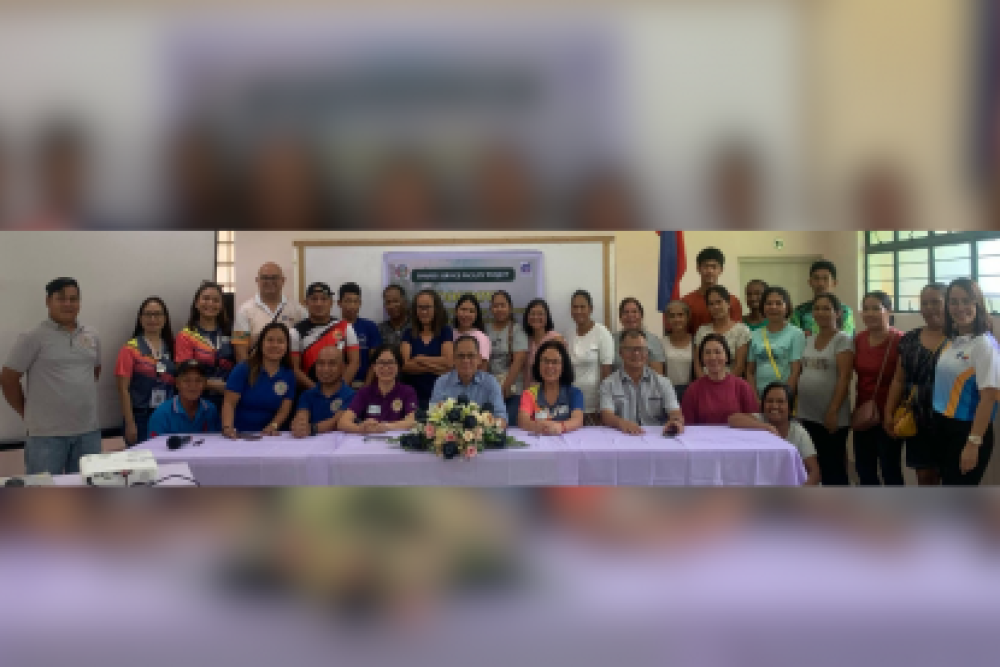
LEGAZPI CITY – More than 300 twiners, coconut farmers, and members of the Coco Coir Business Integration and Development (COCOBIND) in Sorsogon will benefit from a P5-million Shared Service Facility (SSF) Project initiated by the Department of Trade and Industry (DTI).
Ma. Lourdes Pancho, DTI Sorsogon provincial director, said the project aims to modernize equipment and technology essential for enhancing productivity, ensuring quality, and creating more sustainable livelihood opportunities.
"There are many coconut farmers who will benefit from this project. The coconut husks, which are often considered waste, will be transformed into additional income for the group. The P5-million investment in new equipment will improve livelihoods by introducing innovative, modern, and sustainable technologies for processing coconut fiber,” she said.
The investment includes the acquisition of a mobile-type decorticating machine, a carting machine, a baling machine, and twining machines, all vital for producing coco coir.
Pancho said the new equipment is expected to increase production from 10,000 to at least 30,000 units of coco coir per month, helping meet buyers’ demand and increase the farmers’ incomes.
Following the signing of a memorandum of agreement between DTI and COCOBIND on June 3, the bidding process began, along with compliance of all necessary documentation for the purchase of the equipment.
"When the machinery and equipment arrive, they will be managed by DTI and located at the COCOBIND area, our partner. For the next two years, DTI will oversee and supervise the equipment. Once we confirm they can manage it effectively and by the established rules and guidelines, we will turn it over to them while continuing to monitor its use. Training will also be provided for the machine operators upon delivery," Pancho said.
DTI Sorsogon is assisting three farmers' groups engaged in the coco coir business.
"Coconut husk is often seen as waste because it is the coconut meat that is typically collected for producing oil, food products, and other essentials. With this initiative, husks from neighboring towns will also be collected to create eco-friendly and sustainable products such as coco fiber, coco doormats, coco pots, coco geonets, coco pits, and coco poles," Pancho said.
Pancho said the livelihood project helps create more jobs, supports the local economy, and empowers farmers to explore entrepreneurship.
DTI PHOTO
