

Central Visayas is now considered a major seaweed producing region with the Bureau of Fisheries and Aquatic Resources (BFAR) in Region 7 providing valuable assistance to cultivators of the commodity.
One of the seaweed farmers who benefited from the support from BFAR is Zenaida Balante, a seaweed grower in Medellin town in northern Cebu.
“As a seaweed grower, BFAR has helped us a lot in our livelihood as growing seaweeds has been my family’s sole source of income,” she said.
Balanta said the different types of seaweed farming assistance provided by BFAR such as seedlings and a pump boat have been a big help to their community whose primary source of livelihood is seaweed farming.
“They gave us seedlings and taught us how to grow seaweed and how to prepare the nets to be used in farming. We also received a pumpboat that we now use in planting the seaweeds,” she added.
BFAR assistance
As of 2023, BFAR has extended a total of P12 million in assistance to the seaweed industry in Central Visayas.
The bureau provided propagules for seaweed planting and farm equipment such as small pump boats, seaweed nets, and other materials needed for seaweed cultivation.
With the goal of boosting seaweed production in the region, BFAR has provided 122 propagule units for seaweed nursery and grow-out seaweed, of which 118 were given to northern Cebu and four to Bohol province where most of the seaweed farms are established.
BFAR said they are not limiting their assistance to the said areas since they are also looking into other provinces in the region to expand the seaweed farm areas in the region.
Programs for seaweed farmers
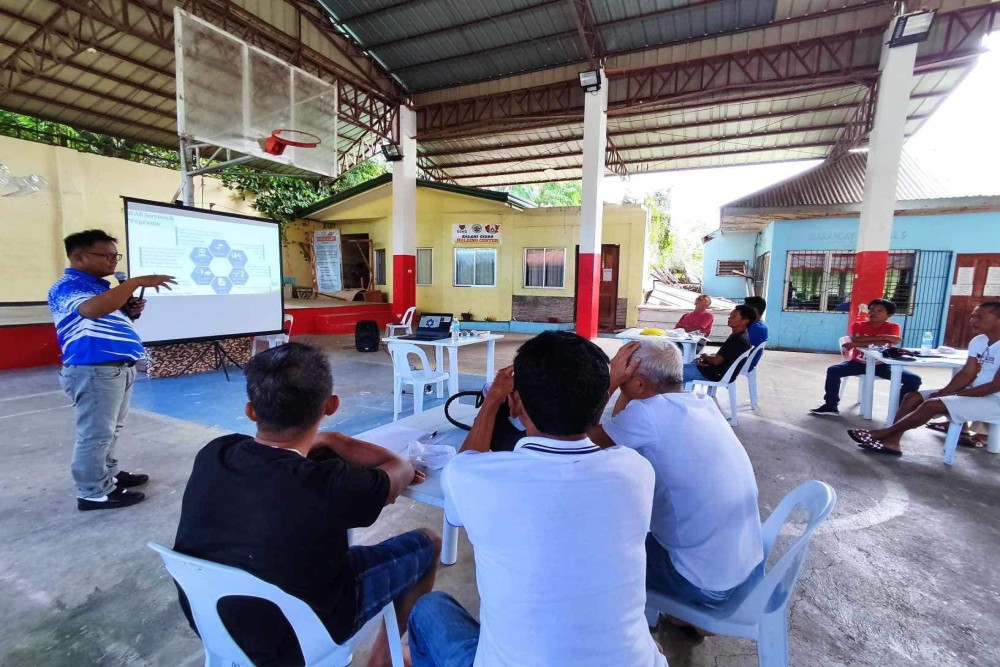
In terms of the programs intended for seaweed growers, BFAR is offering theoretical training and practical fieldwork for seaweed growers and for those who want to engage in seaweed farming.
This aims to enhance the skills and capabilities of the seaweed farmers in their livelihood.
The training modules educate the farmers when it comes to the cultural methods and good practices in seaweed farming.
“We also have financial literacy trainings for seaweed farmers so they will also learn how to handle the financial aspect of their livelihood,” said BFAR Region 7 spokesperson Johann Tejada
BFAR also facilitates and helps seaweed farmers in forming associations and provides trainings on how to properly manage their group and transform it into a cooperative.
The bureau plans to increase the production capacity of regional seaweed laboratories, establish more seaweed nurseries, strengthen capability training programs, and identify other suitable sites for seaweed farming and expansion.
Growing seaweed industry in Central Visayas
The seaweed industry in Central Visayas has topped the list among all sectors in fisheries in terms of crop production volume, according to the 2022 Performance of Agriculture and Fisheries report released by the Philippine Statistics Authority.
Seaweed is the top commodity produced by the aquaculture fisheries subsector, as it ranks highest among the fisheries species in Central Visayas with 13,220 metric tons of production.
The region’s seaweed industry is centered in northern Cebu, where most of the seaweed farms are located in the towns of Bantayan, Santa Fe, and Madridejos, as well as in some portions of Bohol.
There are currently four seaweed nurseries managed by seaweed farmers in the region, making Central Visayas the second largest seaweed farm area in the Visayas and considered a major seaweed producing region in the country.
“Our seaweed is mostly for farming. This year, we aim to improve or expand our seaweed production considering that the pandemic and recent typhoons have changed the dynamics of the seaweed family and affected the industry in general,” said Tejada in Filipino.
Seaweed farming is seen to be a sustainable practice because of its ability to absorb excess nutrients from the water, which enhances water quality and provides a habitat for marine species.
BFAR encourages sustained seaweed planting
As it continues to develop the seaweed industry and uplift the lives of seaweed farmers, BFAR urged the seaweed growers in the region to continue planting seaweed and further develop their livelihood.
Seaweed farming is considered a lucrative livelihood due to its high demand in the market.
“Since the market is currently unstable but the demand for seaweed is very high, we encourage them to keep on planting seaweed. Hopefully, they will not be discouraged by the challenges in their industry,” Tejada said in Filipino.
The bureau also noted that their programs and projects have benefited their recipients, as seen from the improvements in communities that thrive around seaweed farming.
We can say that our assistance to the seaweed farmers have helped them a lot since we have observed an improvement in their way of living. Most of them have been able to send their children to school as a result of their income from seaweed farming,” Tejada explained in Filipino.
Balante said that due to BFAR’s help in her livelihood, she was able to pay for her family’s needs.
“Because of BFAR’s help, we were able to sustain our livelihood that has helped pay for our family’s needs. BFAR also regularly monitors us seaweed growers. They have not been remiss in their benefits to us. They really guided us,” she said in Filipino.
