

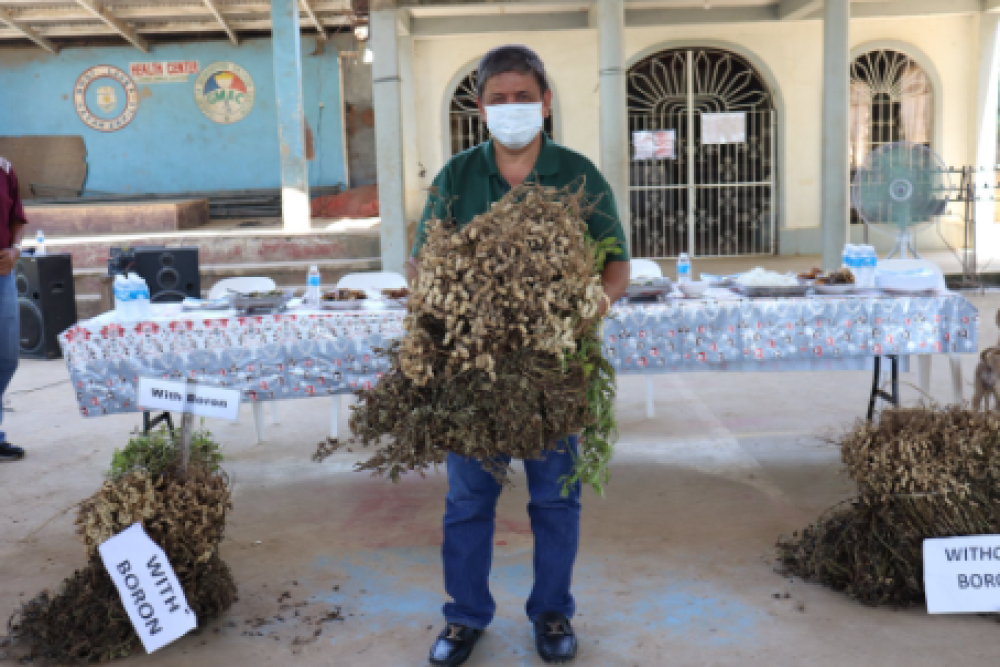
Two regions in Luzon are leading the way for the expanded propagation of peanut.
The two regions, Cagayan Valley and Ilocos Region, are working to revitalize a true native Ilocos red peanut variety.
Department of Agriculture (DA)-Ilocos Region senior science research specialist Melinda Calumpit said peanut is among the important food crops grown widely in the Ilocos Region and Cagayan Valley, particularly in Enrile town, which is known as the peanut capital of the Philippines.
“Due to its versatile uses for food, animal fodder, solvents and oils, textile materials, cosmetics and medicine, there had been an increasing demand for it,” she said.
Apart from providing edible oil, peanuts are widely used for the production of peanut butter, confections, roasted peanuts, snack products, extenders in meat product formulation, soups, sauces and desserts.
In Ilocos Norte, a peanut seed production site promoting at least 25 varieties was established in Dingras town through the DA Regional Field Office 1 to address the limited source of planting materials.
For its part, the town of Enrile in Cagayan has earned the moniker “Peanut Capital of the Philippines” for its vital role in sustaining the supply of peanuts for the local and overseas markets.
Also, Enrile is the only municipality in the Philippines that continuously produces peanuts year-round, contributing eight to 10 percent of the national domestic supply.
With over 1,800 metric tons of peanut production annually, the town paved its way to being recognized as the major producer of quality peanuts in the country.
The DA said that most of the peanut varieties that thrive in Enrile town and also in other municipalities in Cagayan are the BPI Pn9, Jones 3-seeded, Asha, and Namnama.
The town has a total agricultural area of 13, 296 hectares, of which 700 hectares are tilled by more than 800 farmers for peanut production alone. The peanut plantation of the town also has a potential expansion area of another 800 hectares, making peanut an economically viable and high-value crop during drought.
The intercropping of corn and peanuts introduced by the agriculturists in the area is already a traditional production practice among farmers in Enrile. The intercropping practices of the farmers have been supportive of the government’s thrust of attain food sufficiency and sustaining agriculture on the domestic front.
