

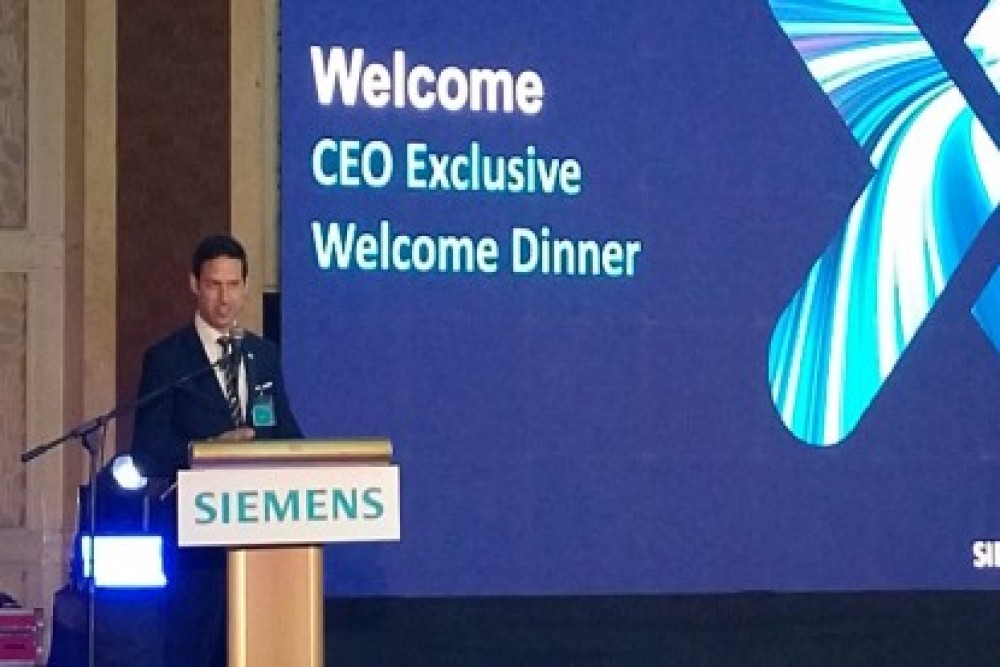
Siemens is optimistic about the sustained growth of their operations in the Philippines as more domestic players turn to smart infrastructure.
Fabian Bergeron, Siemens Inc. Philippines President and Chief Executive Officer, in an interview during the ceremonial turnover of command from his predecessor, Jose Marie Enrico Buergo, on Tuesday evening, said decarbonization moves of more power producers in the country bolster Siemens’ business since it provides components and technologies aimed to help power producers reduce their carbon footprint.
He noted that while their business of providing key components to power grids is just a portion of their total operations in the country, it is “a key portion” and is expected to remain robust as more companies automate.
He disclosed that they are currently in talks with potential clients for a technology that will remove a potent greenhouse gas called sulfur hexafluoride (SF6) and instead use clean air in producing power.
“We have done it already with other customers in other countries. (The) Philippines, I think, will be one of the next ones to adopt this technology to decarbonize their operations. That's for smart infrastructure. Factory automation is a low-hanging fruit,” he told journalists.
“We have many technologies that help customers reduce their energy consumption. And when you reduce energy consumption, you reduce your carbon footprint. Everybody is saving money but also helping the climate as a result.”
Bergeron said their investments in renewable energy (RE) are through their partners, but noted that the government’s bid to further increase the share of RE in the country’s total energy mix is a good boost to Siemens’ domestic business.
